

Why Does Honey Crystallise?
Honey crystallises because of the natural sugars that originate in the nectar collected by honeybees from flowers. As bees transform nectar into honey, these naturally occurring sugars become concentrated. Over time, one of them — glucose — can naturally form crystals, causing liquid honey to become cloudy, thicker, grainy or eventually set.
Glucose and fructose are the naturally occurring principal sugars naturally found in genuine honey, originating predominantly from the nectar gathered by the bees.
Crystallised honey has not necessarily gone bad and is normally perfectly good to eat. How quickly honey crystallises depends on the natural composition of that particular honey, together with factors including its floral origin, moisture content, temperature, storage conditions and the presence of tiny particles or existing crystals around which crystallisation can begin.
At Northumberland Honey Company, crystallisation is something we work with first-hand as commercial bee farmers and honey producers. Different honey crops can behave remarkably differently, and understanding this natural process allows us not only to manage honey after harvest, but deliberately control crystallisation when producing smooth soft-set honey.
Written by Luke Hutchinson
Scientifically reviewed by Suzanne Hutchinson PhD
Why Does Some Honey Crystallise Faster Than Others?
Not all honey crystallises at the same speed because not all flower nectar has the same natural sugar composition.
The nectar gathered by honeybees naturally contains sugars. During the process of making honey, the bees transform the nectar and reduce its water content, producing the concentrated natural food we recognise as honey.
Two of the principal sugars naturally present in honey are fructose and glucose. Glucose is less soluble in water than fructose, so under the right conditions some of it can naturally leave the liquid phase and form crystals. Those initial crystals can then provide sites around which further crystallisation develops.
The proportions of these naturally occurring sugars vary between honeys because the flowers and other forage visited by the bees vary. This is one reason why the botanical or floral origin of honey can have such an important influence on how quickly it crystallises.
Moisture content, temperature, storage conditions and the presence of microscopic particles or existing crystals can influence the process too. Scientific research into honey crystallisation therefore considers factors including the natural fructose-to-glucose and glucose-to-water ratios when investigating why different honeys crystallise at different rates.
We see these differences first-hand in our own honey production. Honey harvested from different forage and at different points in the British season doesn’t necessarily behave in the same way after extraction. Some crops naturally begin crystallising relatively quickly, while others can remain liquid for considerably longer.
For us as professional honey producers, crystallisation isn’t simply honey “going hard”. It is a natural characteristic of each honey crop that we learn to understand and manage.
Does crystallisation mean sugar has been added?
No. Genuine honey naturally contains sugars, principally fructose and glucose, originating predominantly from the nectar collected by the bees. The natural crystallisation of glucose in honey is not evidence that glucose syrup or another sugar syrup has been added.
Does crystallisation prove honey is raw?
No. Crystallisation alone does not prove that honey is raw, pure or unprocessed. How readily a honey crystallises depends on its natural composition as well as how it has subsequently been handled and stored.
My Honey Has Crystallised – What Should I Do?
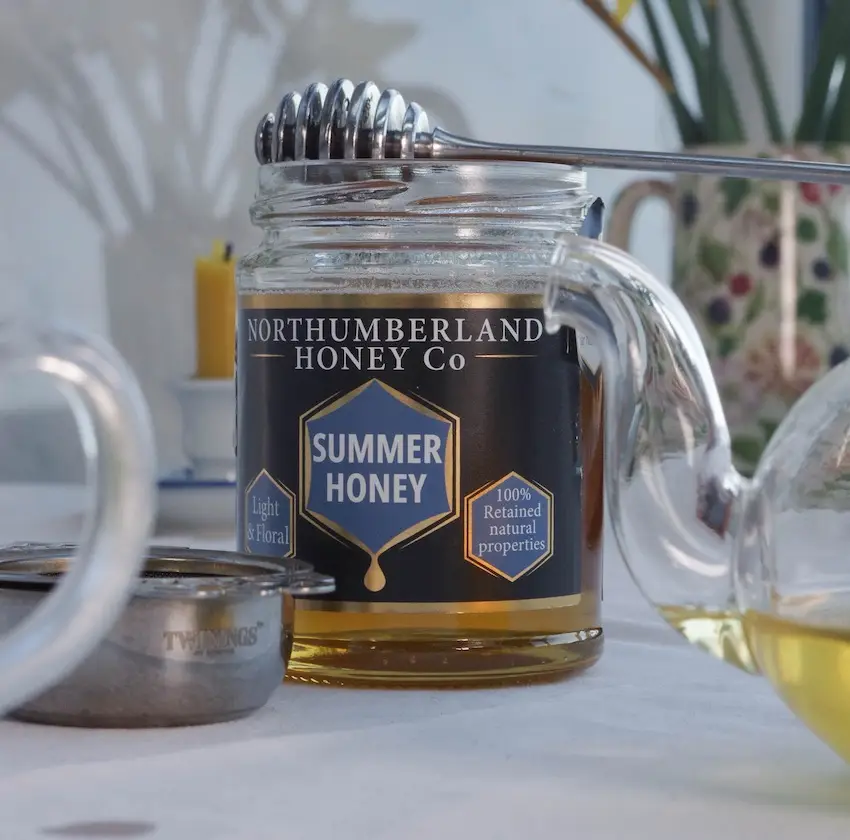
If your honey has crystallised, there is usually nothing wrong with it. Crystallisation is a natural physical change in honey and does not, by itself, mean that the honey has spoiled. Crystallised honey can normally be eaten exactly as it is.
Some people actually prefer its thicker texture. It can be spread on toast, spooned onto porridge, stirred into drinks or used in cooking just as you would use liquid honey.
If you prefer your honey runny, the crystals can be dissolved by gently warming the honey. Place the closed jar in warm water and allow it to warm gradually. Avoid unnecessarily high temperatures or prolonged heating.
Don’t be surprised if the honey eventually crystallises again. Warming dissolves the existing crystals, but it doesn’t fundamentally change the natural composition of that honey that made it prone to crystallisation in the first place.
Want to know how we carefully warm and handle our honey? Read our guide to what makes honey raw →
From Crystallised Honey to Soft-Set Honey
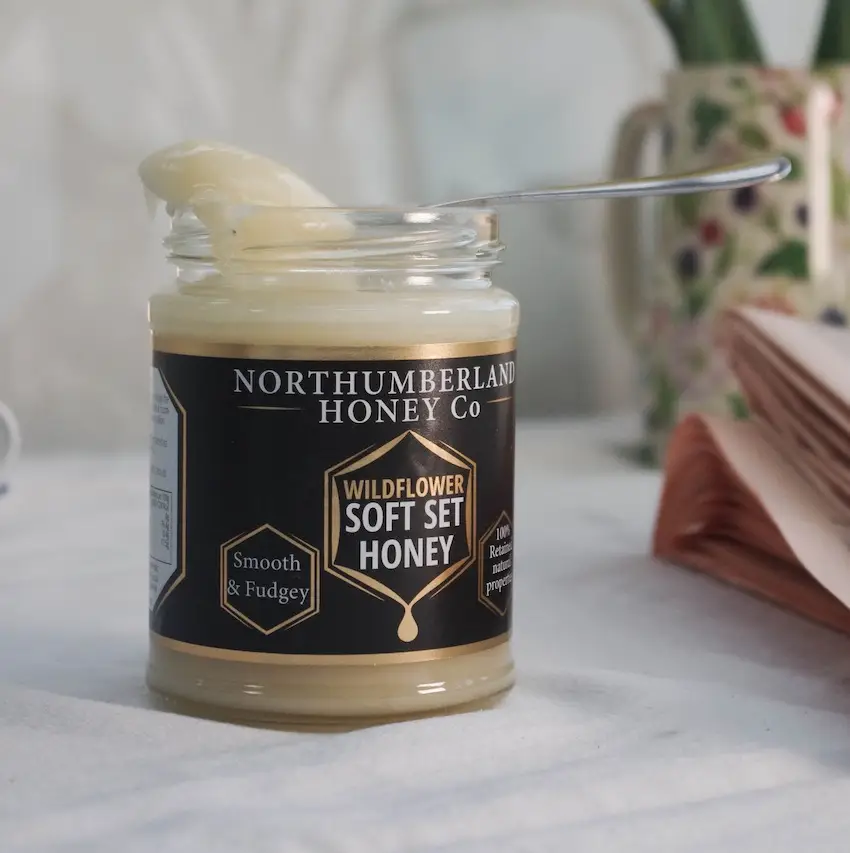
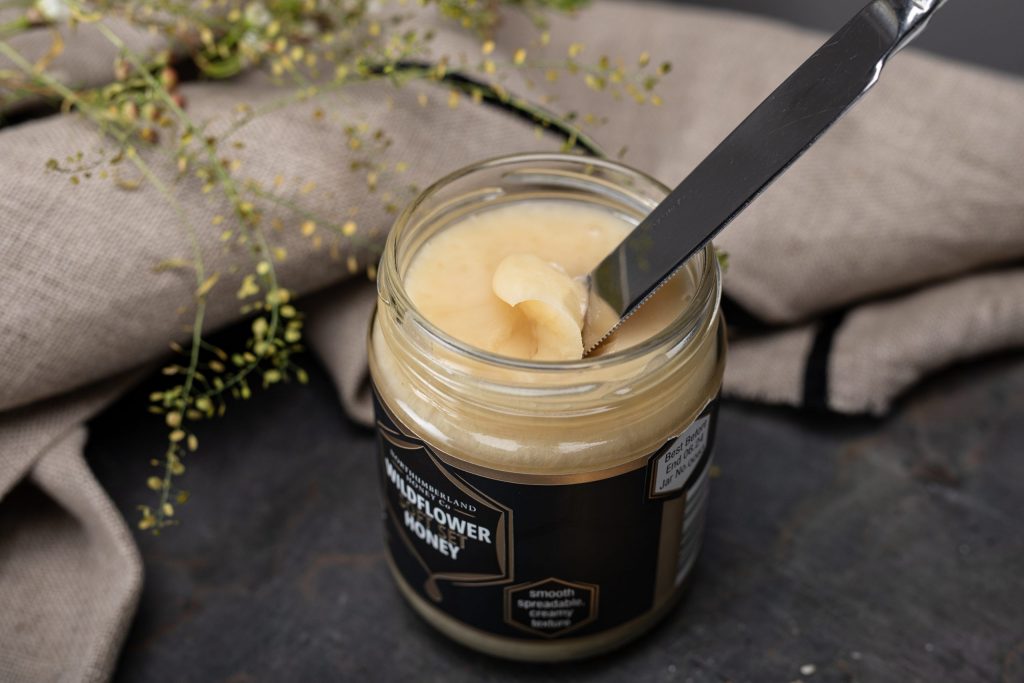
Crystallisation isn’t always something a honey producer wants to prevent. At Hutch Family Honey, we deliberately control this completely natural process to produce our soft-set honey.
The difference between coarse or grainy crystallised honey and beautifully smooth soft-set honey isn’t that one contains crystals and the other doesn’t. Both are crystallised honey. The important difference is how those crystals develop and how the crystallisation process is managed.
By encouraging the formation of very fine honey crystals and carefully managing the conditions under which the honey sets, we can encourage a smooth, creamy texture rather than allowing larger, more noticeable crystals to develop naturally.
The science behind this is well established. Peer-reviewed research into controlled honey crystallisation has shown that introducing fine seed crystals can accelerate crystallisation and encourage more uniform crystals, while temperature and the natural properties of the starting honey also influence the process.
For us, however, this isn’t simply theory. We work with crystallisation commercially using honey produced from our own bees. Honey is an agricultural product and individual crops do not necessarily behave identically. Understanding the honey we are working with and observing how each batch behaves are therefore important parts of producing consistently smooth soft-set honey.
It is one of the fascinating aspects of honey production: the same natural process that can turn a jar of liquid honey grainy can, when understood and carefully controlled, be used to create an intentionally smooth soft-set honey.
Crystallised Honey FAQs
Why does honey crystallise?
Honey crystallises when naturally occurring glucose, derived from the nectar gathered by bees, begins forming crystals. How quickly this happens varies with the honey’s floral origin, natural composition, temperature and storage.
What should I do with crystallised honey?
Crystallised honey can be eaten just as it is. If you prefer it runny, gently warm the closed jar in warm water to dissolve the crystals. It may naturally crystallise again later.
Can you eat crystallised honey?
Yes. Crystallisation is a natural physical change and does not, by itself, mean honey has spoiled. Crystallised honey is normally perfectly good to eat and some people prefer its thicker texture.
Why has my honey crystallised?
Different honeys crystallise at different rates because their natural composition varies according to the nectar gathered by the bees. Floral origin, moisture, temperature and storage conditions all influence how quickly honey sets.
Does crystallised honey mean sugar has been added?
No. Genuine honey naturally contains glucose and fructose derived predominantly from flower nectar. Crystallisation is a natural property of honey and is not evidence that glucose syrup or another sugar syrup has been added.
Does raw honey crystallise?
Yes, raw honey can crystallise, but crystallisation alone does not prove that honey is raw. A honey’s natural composition and how it has been handled and stored all influence crystallisation.
About the Author
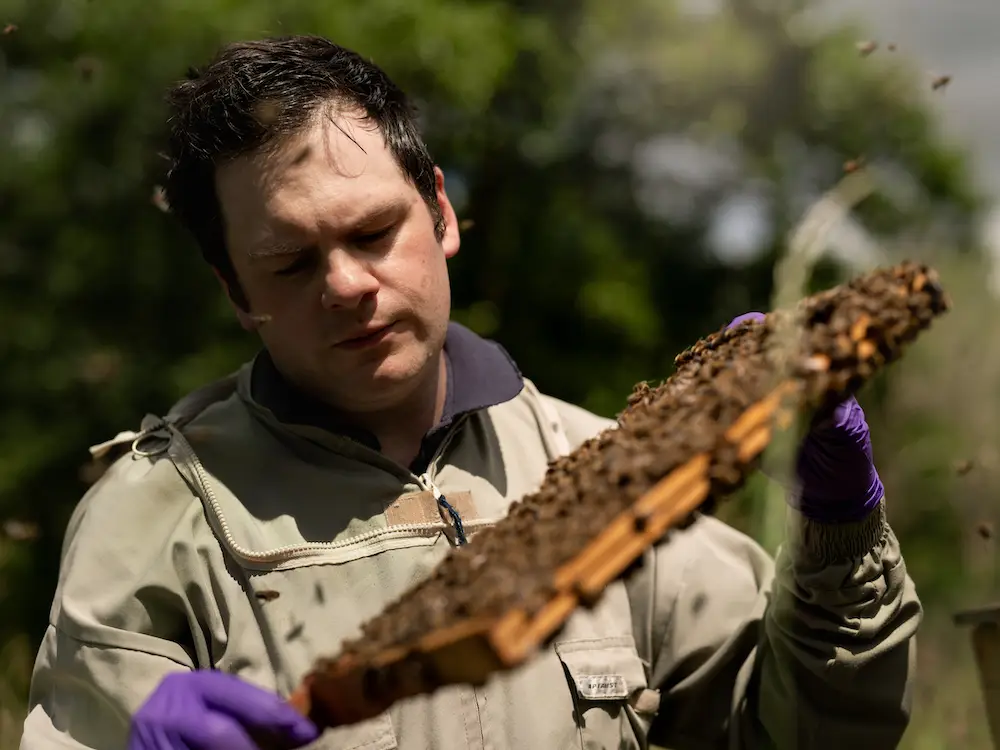
Luke Hutchinson
Professional Bee Farmer, Queen Breeder & Co-Founder
Luke Hutchinson – Professional Bee Farmer, Queen Breeder & Co-Founder
Luke Hutchinson is co-founder of Northumberland Honey Company and Hutch Family Honey, Vice-Chair of the Bee Farmers’ Association of the United Kingdom, a Liveryman of the Worshipful Company of Wax Chandlers and a Freeman of the City of London.
Luke writes from first-hand experience of professional bee farming and commercial British honey production, including honey extraction, handling, storage and the controlled crystallisation used in soft-set honey production.
Scientific Review
Suzanne “Suzie” Hutchinson PhD
Scientist, Professional Bee Farmer & Co-Founder
Suzanne Hutchinson is co-founder of Northumberland Honey Company and Hutch Family Honey and holds a PhD in Molecular Nutrition from Newcastle University.
Suzie combines her scientific background with first-hand experience of professional bee farming, honey production and product development. Her scientific review of this article brings together peer-reviewed research with the practical realities of working with honey as a natural agricultural product.